Essential Real Estate Buying Advice in Costa Rica
Thinking about buying property abroad? Costa Rica’s real estate market continues to draw international buyers with its stunning scenery and stable economy. The process is straightforward—foreigners have the same ownership rights as local citizens. This makes it an attractive destination for savvy investors and future homeowners alike.
Your journey might start with a dream of a beachfront villa or a mountain retreat. Perhaps you’re looking for an income-generating asset. Understanding the local property landscape is the crucial first step toward a confident and informed purchase.
We’re here to walk you through it. At GAP Real Estate, we focus on buyer education and highlight investment-ready properties. We connect you with trusted local professionals—attorneys, notaries, and escrow agents. This network handles the complex details, from due diligence to closing, ensuring your transaction is transparent and legally sound.
Our approach is casual and pressure-free. We provide clear guidance on the Costa Rican estate and construction processes. Remember, this is educational content—not legal or tax advice. We always recommend partnering with qualified local experts to protect your investment every step of the way.
Navigating the Costa Rican Property Market
Successfully acquiring property in Costa Rica hinges on navigating a market that blends stability with complexity. The 2025 landscape remains one of Latin America’s most stable. High demand continues in coastal hotspots like Jacó, Samara, and Tamarindo.
This market attracts a diverse mix of retirees, investors, and digital nomads. Each group seeks both lifestyle and financial opportunity. Understanding these regional dynamics is your first crucial step.
Realistic timelines are essential. The process isn’t cookie-cutter. Conditions and local regulations vary by location, property type, and legal structure.
We help buyers identify investment-ready opportunities. These are homes and land parcels pre-vetted for clean title and proper zoning. This focus minimizes hidden surprises and costly delays.
Working with local professionals is non-negotiable. You need boots-on-the-ground expertise in Costa Rican property laws and registry systems. Their guidance ensures you navigate the nuances successfully from day one.
Patience and thorough due diligence are rewarded here. Rushing the discovery process can lead to complications. We emphasize a methodical approach to align your choice with both lifestyle and financial goals.
Buyer and Investor Education: A Step-by-Step Discovery Process
Our approach to buyer education transforms the complex journey of acquiring real estate into a clear, step-by-step path. We don’t just show you listings. We teach you how to evaluate a property like a seasoned investor.
Identifying Investment-Ready Properties
An investment-ready property has more than curb appeal. It has a clean title registered in the Public Registry. Boundaries are surveyed and marked.
Zoning must match your intended use. All necessary permits for construction or renovation should be in place. This groundwork ensures a solid investment.
Understanding Local Regulations and Processes
Local property laws in Costa Rica differ from those in the U.S. or Europe. Key regulations include the Maritime Zoning Law for beachfront. Condominium rules also impact your purchase.
Foreign buyers should gather documents early. This includes proof of income, valid ID, and property details. Sometimes a local co-signer is needed for financing. Knowing this smoothes the entire process.
Understanding owner-financing-vs-rent-to-own-in-costa-rica
When traditional bank loans aren’t an option, creative financing structures can open doors to property ownership. Many buyers explore these popular alternatives.
We want to clarify how these two paths work. Their core mechanics and legal implications are very different.
Key Differences and Strategic Benefits
In an owner financing deal, the seller acts as your lender. You agree on a price, make a down payment, and settle the balance over time.
Title transfers to you at closing, secured by a mortgage. This setup often means a faster process with negotiable payment schedules.
Rent-to-own is a hybrid model. You lease the property with a contractual option to buy it later.
A portion of your rent may credit toward the future purchase. You don’t own the asset until you exercise that final option.
How It Impacts Your Purchase Decision
Your choice hinges on readiness and goals. Owner financing is direct if you seek immediate ownership and have a down payment.
Rent-to-own offers a trial period. It suits those needing more time to arrange funds or test a location.
Always have a local attorney review any agreement. They ensure terms are clear and your interests are protected.
Financing options vary widely. For a broader look at alternatives, visit gapequityloans.com.
Property Vetting and Due Diligence Essentials
Before any funds change hands, a meticulous property vetting process is your essential safeguard. This due diligence confirms you’re buying exactly what’s claimed. It uncovers hidden liens, boundary disputes, or zoning issues.
We coordinate this entire process with local attorneys and surveyors. Their expertise is irreplaceable for a secure property transfer.
Clean Title Review, Surveys, and Boundary Checks
Every property in Costa Rica has a unique folio real number in the Public Registry. Your attorney pulls a registry report to verify ownership and check for liens. They also confirm the tax appraisal value.
A registered survey, or plano, defines the boundaries. Your surveyor physically checks these property lines on the ground. This ensures the land area matches the official records.
Zoning, Permits, and HOA/Condo Guidelines
Local zoning rules dictate what you can build. Verify that your intended use is permitted. Existing structures must have proper construction permits.
If buying into a condominium, review its registered regime. Understand all monthly fees and rules. This includes any planned special assessments.
Also confirm water source legality and road access easements. Check that all municipal fees and transfer taxes are paid current. These steps protect your Costa Rican property’s value and your peace of mind.
Coordinating Property Tours and Offer Guidance
We help you make the most of your time on the ground with carefully planned property visits. Our coordination is more than just scheduling. We create a strategic itinerary that aligns with your priorities and budget, whether you’re here for a focused week or exploring over several trips.
During tours, we provide a critical walk-through. We highlight appealing features and point out potential red flags. These can include access road conditions, utility setups, or signs of needed repairs.
This on-site insight directly informs your purchase decision. Once you find a property you’re serious about, our offer guidance begins. We help you structure a competitive and realistic proposal.
This includes advising on an earnest money deposit—typically 5-10% held in escrow. We also suggest key contingencies for due diligence and financing. Understanding local seller expectations in Costa Rica is crucial.
Some markets are flexible, while high-demand areas may have multiple buyers. Strategic positioning is key to securing the right property. We also set clear timelines.
The process from accepted offer to closing often takes 30 to 90 days. This allows for thorough title review, surveys, and professional coordination. Our goal is to guide you from tour to a confident, well-structured purchase.
Managing the Closing Process in Costa Rica
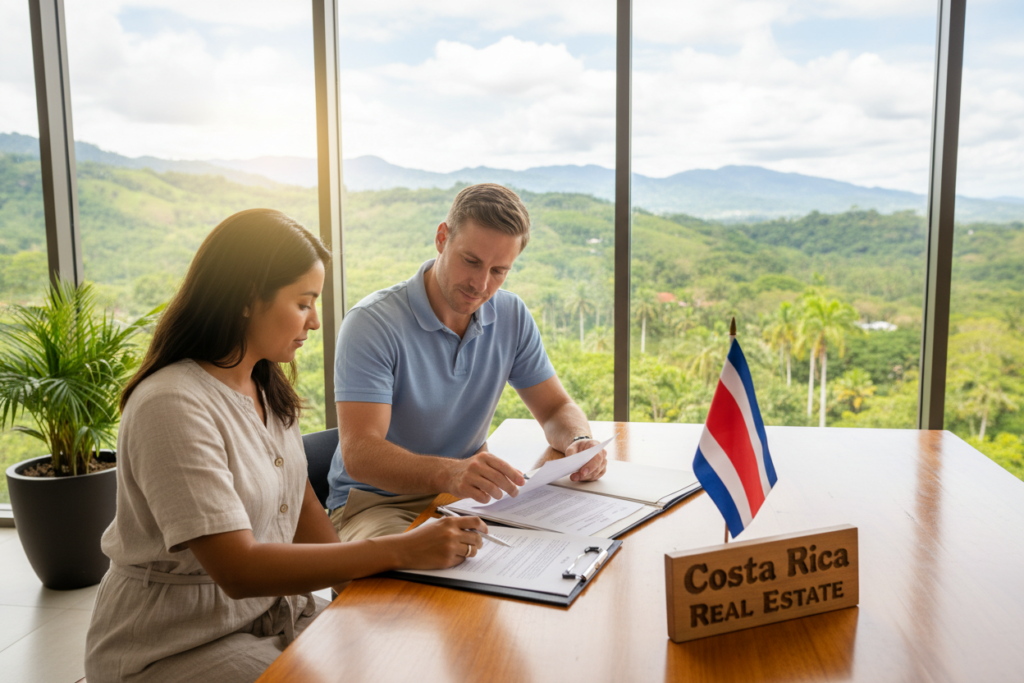
A smooth closing process in Costa Rica relies on expert coordination with local professionals. This final phase transfers legal ownership to you. We ensure every detail is handled correctly.
Working with Local Pros: Attorneys, Notaries, and Escrow
Your team includes a local attorney, a notary public, and often an escrow agent. Here, a notary is a licensed attorney with significant legal power. They draft the transfer deed and submit it to the Public Registry.
If paying cash, you typically choose this professional. With financing, options include using the seller’s notary or a joint arrangement. Your attorney guides this critical choice.
Coordinating Due Diligence and Final Documentation
All prior vetting must be complete before closing. This means a clean title, confirmed survey, and all permits are verified. The seller must provide proof taxes are paid.
The notary then prepares the final Escritura for signing. After signing, they present it to the Public Registry. Full registration can take 30 to 60 days.
Understanding closing costs upfront is key. These include transfer taxes and notary fees. Your team will provide a clear breakdown.
We follow up to ensure your deed is fully registered. This protects your investment for the future.
Legal Considerations and Title Security in Costa Rican Real Estate
Legal security is the bedrock of any successful real estate investment in Costa Rica. Understanding the framework that protects your ownership gives you confidence. It ensures your purchase is legitimate and free from hidden claims.
Understanding Property Rights and Recording Systems
Costa Rican law grants absolute property rights. As an owner, you have exclusive rights to possess, use, and dispose of your estate. Foreigners enjoy the same rights as local citizens.
The Public Registry is the cornerstone of title security. Every property gets a unique folio real number. All documents affecting title must be recorded here to be legally valid.
Costa Rica follows the “first in time, first in right” doctrine. The priority of claims depends solely on the recording date. An unrecorded lien or mortgage is invalid against a new owner.
Your attorney pulls a registry report during due diligence. This document shows the current title holder, boundaries, and tax appraisal value. It provides a complete legal snapshot.
A clean report offers strong protection. It largely eliminates the need for title insurance common elsewhere. For complex cases, extra verification services add peace of mind.
Remember, this is educational information. Always work with a qualified Costa Rican real estate attorney. They will protect your rights throughout the entire process.
Budgeting for Closing Costs and Associated Fees
One of the most common surprises for new buyers is the range of closing costs involved. Smart financial planning means budgeting for these expenses upfront. In Costa Rica, total closing costs typically range from 3% to 6% of the purchase price.
Buyers and sellers customarily share these costs equally. This includes government taxes, professional fees, and registry charges. Understanding this breakdown prevents last-minute surprises.
Notary Fees, Transfer Taxes, and Other Expenses
The largest single cost is the Real Estate Transfer Tax. It is 3% of the property’s registered value. The Public Registry requires proof of payment before recording your deed.
Documentary stamps add about 1.1% of the registered value. These are mandatory stamps for the Legal Bar Association, Municipality, and other entities.
Notary fees are calculated differently. They are based on the actual sales price you pay. The rate is 1.5% on the first million colones and 1.25% on the balance.
Costa Rica uses a two-tiered value system. The registered value for tax purposes is often much lower than market price. Most government fees are calculated on this lower value, which helps keep costs manageable.
Additional costs include attorney and potential escrow fees. Your attorney should provide a detailed estimate early. Also, verify the seller has paid all property taxes before closing. This protects you from inheriting any debt.
Exploring Financing Options: Local and International Perspectives
Securing the right financing is a pivotal step for any international property purchase. The landscape is diverse, with strategies varying based on your credit, income, and residency status.
We keep this overview general because every buyer’s situation is unique. What works for one investor may not suit another.
General Financing Strategies and Options
Local banks offer mortgage products to qualified foreign buyers. These loans often have variable interest rates and specific documentation requirements.
International lenders from your home country can be an alternative. They may provide more familiar terms and fixed rates.
Private financial institutions offer faster, more flexible approval. Their criteria can accommodate non-traditional income sources.
Some buyers leverage existing home equity or investments. This approach avoids complex foreign loan applications.
All lenders will scrutinize your income, employment, and the property details. Be prepared with tax returns and bank statements.
Referring to gapequityloans.com for More Details
Financing Costa Rica property has no one-size-fits-all solution. Loan terms and interest rates depend on many factors.
We avoid giving specific rate comparisons or guarantees. For detailed guidance tailored to your finances, we refer you to our specialists.
Visit gapequityloans.com to explore equity-based lending and other structures. Their team can evaluate options that align with your long-term goals.
Negotiating Purchase Terms and Evaluating Ownership Structures
Finalizing your property acquisition in Costa Rica involves two key strategic decisions. You must negotiate the purchase terms and select an ownership structure. Both choices directly impact your long-term costs, legal protection, and the property’s future value.
Individual, Joint, or Corporate Ownership Considerations
You can hold title in your personal name, jointly with others, or through a local corporation. Each structure has distinct implications for privacy, liability, and estate planning.
Individual or joint ownership is straightforward. Your name is on the public record, and you have direct control. This is often ideal for a primary residence.
A Costa Rican corporation offers privacy and can simplify future transfers. However, it requires annual maintenance and compliance. There’s no universal right answer for all buyers.
Your decision should follow consultation with a local attorney and a tax professional. They will assess your specific situation and goals.
When negotiating terms, look beyond the price. Discuss the earnest money deposit, due diligence timeline, and who pays closing costs. For construction projects, tie payments to clear milestones.
Always formalize every agreed term in a written purchase agreement. Your attorney must review this document before you sign. This clarity protects your investment from the start.
Smoothing the Post-Purchase Transition and Ownership Process
The moment your deed is recorded, your focus shifts from buying to owning—a transition filled with practical steps. You become responsible for your new home and its ongoing care. We’re here to guide you through this important phase.
Start by coordinating a final walkthrough with the seller. Collect all keys, warranties, and instruction manuals. Also, gather important documents like construction permits and HOA bylaws.
Next, transfer utility accounts into your name. Contact ICE for electricity and AyA for public water. Set up internet and arrange for garbage collection. Don’t forget to secure property insurance for full protection.
Understand your regular obligations as well. Pay annual property taxes and any HOA fees on time. For future residents, owning a home can support your residency application. It demonstrates a commitment to life in Costa Rica.
Take this time to get to know your new community. Establish relationships with reliable local service providers. This practical approach helps you settle in smoothly and enjoy your property for years to come.
Final Steps on Your Costa Rican Real Estate Journey
Your journey toward owning a piece of Costa Rica is now within reach. You understand the discovery process, due diligence, and legal frameworks that make a transaction secure.
The key takeaway? Buying real estate here is absolutely achievable. It requires education, patience, and working with experienced local professionals. Shortcuts can lead to problems years later.
At GAP Real Estate, we guide you through every phase. We identify investment-ready properties and coordinate with attorneys and notaries. Our casual approach prioritizes your interests over pressure.
Ready to explore current listings or get answers? Reach out today via WhatsApp at +506 4001-6413, call toll-free at 855-562-6427, or visit gaprealestate.com.
Owning property in Costa Rica is more than a financial move. It’s embracing the Pura Vida lifestyle and creating a home your family can enjoy for years.
FAQ
What is the main difference between owner financing and a rent-to-own agreement for a property here?
Why would a buyer choose seller financing over a traditional bank mortgage in this market?
What are the typical closing costs for an owner-financed purchase compared to a cash transaction?
How safe is an owner-financing agreement from a legal perspective in Costa Rica?
Can foreign buyers with non-local income qualify for these alternative financing options?
What is the first step if we find a property where the seller might consider owner financing?
More to Explore