
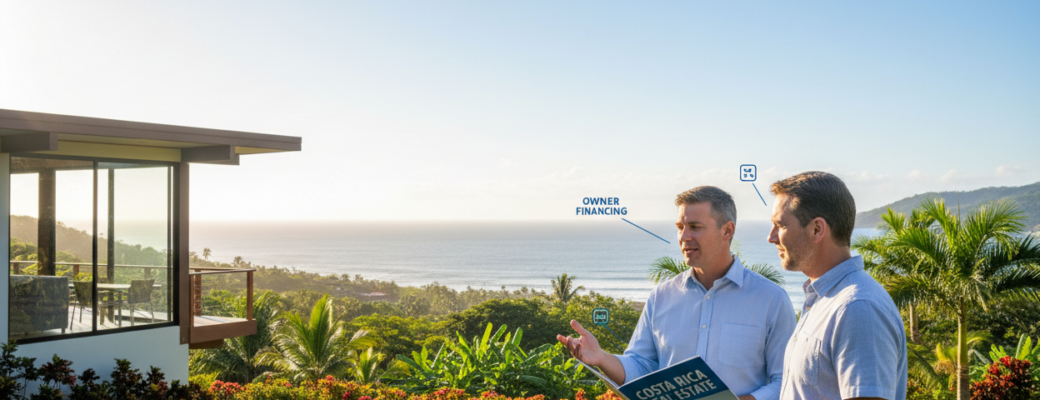
Costa Rica Real Estate Buyer’s Guide: Understanding Owner Financing
Foreign investment in Costa Rican property is booming, with demand rising over 20% last year. This surge highlights a major shift in how deals get done. In many regions, more than 40% of transactions now use direct seller financing.
For international buyers, traditional bank loans can be a closed door. Owner financing opens it. This flexible option is why the market continues to attract savvy investors. We’re here to help you understand it.
At GAP Real Estate, we provide straightforward education. We help you navigate the full journey—from discovery to closing. Our role is to coordinate with local pros like attorneys and notaries. We focus on what actually matters to you.
This guide will walk you through the critical elements. We’ll cover title review, zoning, and ownership structures. We set realistic expectations on timelines. Our approach is casual and practical, with no unrealistic promises. By the end, you’ll know how to take your next steps with confidence.
Discovering Costa Rica’s Real Estate Landscape
The appeal of Costa Rican properties isn’t just in the scenery—it’s in a market built on growth and accessibility. We want to give you a clear, realistic view of where opportunities exist today.
Market Overview for International Buyers
Demand in Costa Rica’s real estate market has surged. Prime areas see annual appreciation of 8% to 15%. This growth is fueled by limited inventory and strong tourism.
Foreign buyers have the same ownership rights as locals. This legal security makes investing here straightforward. You can own titled property outright.
Opportunities in Prime and Emerging Regions
Hotspots like Tamarindo and Nosara attract consistent interest. These areas offer modern amenities and beautiful settings. They are ideal for a vacation home or rental property.
Beyond the famous beaches, emerging regions present early opportunities. Savvy investors look there before prices climb. The diversity of properties—from condos to land—matches various goals.
Understanding Owner Financing Requirements in Costa Rica
When traditional banks say no, many property sellers in Costa Rica say yes through direct financing. This method, often called seller financing, is a popular path to ownership. It creates a flexible agreement between you and the property owner.
Defining Owner Financing Terms
In simple terms, the seller acts as your lender. You agree on the loan details directly. A typical structure involves a substantial down payment, often 30% to 50% of the property’s value.
The loan term usually spans three to five years. The seller retains a legal claim on the asset until the final payment. This setup benefits both parties—sellers attract serious buyers, and buyers access a simpler purchase process.
Qualification Essentials for Buyers
Banks here often require local credit history and residency. Seller financing focuses on different essentials. Your capacity for the down payment is a primary factor.
Sellers look for a clear demonstration of commitment and financial stability. The specific terms, including interest rates and schedules, are personalized. For tailored lending solutions, we recommend consulting resources like gapequityloans.com.
Remember, this is educational information to help you understand the landscape. Always seek professional financial and legal advice for your specific situation.
Navigating the Buying Process Step-by-Step
The path to securing your ideal property unfolds through discovery, vetting, and coordinated due diligence. We guide you through each phase, ensuring you understand what to expect. Our role is to be your educational resource and coordinator.
Discovery, Vetting, and Property Tours
We start by helping you identify investment-ready properties that match your goals. This discovery phase considers your budget, preferred locations, and property type.
Next, vetting is critical. We evaluate properties for clean title, proper zoning, legal access, and utilities. This helps uncover any red flags before you commit.
During property tours, you’ll check physical boundaries, road access, and neighborhood character. It’s a hands-on way to verify a property’s condition and surroundings.
Offer Guidance and Coordinating Due Diligence
Once you find a property, we help structure your purchase offer. This includes advising on an earnest money deposit, which shows serious intent.
If the offer is accepted, we coordinate due diligence with local professionals. This involves attorneys for title review, surveyors for boundaries, and specialists for zoning confirmations.
The typical timeline from acceptance to closing involves several weeks of checks. Final registration at the Public Registry usually takes 30 to 60 days, assuming all documentation is in order. We set realistic expectations throughout the entire process.
The Importance of Clean Title and Comprehensive Surveys
A secure investment in Costa Rica starts with one fundamental check: a clear and undisputed title. Without this, your real estate purchase rests on shaky ground. We emphasize this review as the non-negotiable first step.
Clean Title Reviews Explained
Costa Rica operates a fully computerized Public Registry (Registro Nacional). Every property document is recorded here. Your attorney searches it by owner name or a unique folio real number.
A title report shows the current owner, boundary lines, tax value, and any liens. The system follows a “first in time, first in right” doctrine. This means recorded items have priority, and unrecorded claims are invalid.
This robust framework eliminates the need for title insurance. The official certificate is strong evidence of ownership. However, you must also verify physical boundaries.
A certified survey, or plano catastrado, maps the lot lines. It confirms dimensions and checks for encroachments. Your attorney cross-references this map with the registry’s legal description.
Working with a qualified local professional is essential. They conduct the deep review to ensure everything aligns. This isn’t DIY territory—cutting corners here creates significant risk.
Zoning, Permits, and Ownership Structures
Before you build, rent, or even plant a garden, you need to understand the rules that govern your land. Zoning dictates what you can do with a property. You must also verify building permits for any existing structures.
How you choose to hold the title is equally important. We’ll break down two key areas that shape your ownership experience.
Understanding HOA/Condo Rules
Buying in a planned community or condo building means agreeing to specific rules. These HOA or condominium regulations cover monthly fees, rental policies, and architectural standards.
Review these rules before you commit. They directly impact your use of the property and your budget.
Corporate vs. Personal Ownership Considerations
You can buy in your personal name or through a Costa Rican corporation. Personal ownership is simpler. A corporate structure can offer privacy and easier future transfers.
Each choice has different tax and legal implications. Your specific goals determine the best path forward.
We strongly recommend consulting a qualified local attorney. They will provide guidance tailored to your situation in Costa Rica. This ensures your investment is structured correctly from the start.
Legal Framework and Essential Documentation
Navigating the legalities of a real estate transaction here involves understanding a unique notary system. The process relies on specific documentation and licensed professionals to ensure a secure transfer.
Role of Notaries and Local Attorneys
In Costa Rica, a Notary Public is a licensed attorney with extensive state powers. Unlike in the U.S., they do more than witness signatures. They draft, interpret, and authenticate property transfer documents.
The key instrument is the transfer deed, or Escritura. This legal document formally changes ownership. The notary executes it and presents it to the Public Registry for recording.
Who selects the notary? For all-cash deals, the buyer typically chooses. With financing, arrangements vary. The notary’s fees are set by law—1.5% on the first million colones of the sales price, then 1.25% on the balance.
Your attorney handles critical paperwork: title searches, tax certifications, and survey verification. Choosing an attorney experienced with foreign buyers is vital. We coordinate with your legal team but do not replace them. This is informational, not legal advice—always retain independent counsel.
Exploring Alternative Financing Options in Costa Rica

For many international investors, securing capital for a Costa Rican purchase involves exploring alternatives to local banks. Traditional mortgage loans from these institutions are often out of reach for non-residents.
This reality has fostered a vibrant market of other financial pathways. We’ll outline the primary categories to help you understand the landscape.
Insights into Seller and Private Financing
Seller financing remains a highly popular option. It bypasses bank bureaucracy and offers flexible terms directly negotiated with the property owner.
Private lending is another key avenue. Here, an individual or investment group acts as the lender. They often provide short-term capital with faster approval processes.
International and offshore financing solutions also exist. Specialized lenders in this space understand cross-border transactions.
Local bank financing is typically challenging. It usually requires legal residency, extensive documentation, and a local co-signer.
Your best financing option depends on your unique situation. For personalized lending solutions, we recommend consulting resources like gapequityloans.com. This is informational content, not specific financial advice.
Practical Steps for Property Inspections and Tours
Walking a property in person is your best chance to spot details that photos and descriptions miss. We treat these tours as a hands-on due diligence check. Your goal is to verify functionality and identify any potential issues.
Key Elements to Look for on Property Tours
Start by confirming physical boundaries. Look for markers or fences that match the survey. Note any encroachments from neighbors.
Assess road access carefully. Is it a public road or a private easement? Check if it’s passable year-round, especially during the rainy season.
Verify all utilities. Confirm electricity is connected and metered. Identify the water source—municipal, well, or community system. Ask for a water availability letter for non-municipal sources.
Inspect the home’s construction. Look at the foundation, roof, and finishes. Check for signs of water damage or unpermitted modifications.
Finally, evaluate the neighborhood. Consider noise levels, proximity to amenities, and overall character. Does the area align with your lifestyle goals?
This practical approach helps you ask informed questions. Share any concerns with your agent and attorney immediately.
Investment-Ready Property Features to Consider
An investment-ready property in Costa Rica isn’t just about views. It’s about verified location advantages, rental demand, and legal readiness. We look for characteristics that support income generation or long-term value appreciation.
Location is the primary driver. Proximity to beaches, national parks, and modern amenities boosts rental appeal. Established expat communities and emerging areas with new infrastructure also show strong potential.
Consider the rental income strategy. A beachfront condo targets vacation renters. A home near services appeals to long-term tenants. Your choice should match your goals for cash flow.
Property condition matters, too. A turnkey home offers immediate income. A fixer-upper might add value through renovation, if you can manage it. Legal readiness—clean title and proper permits—is non-negotiable for any investment.
While some Costa Rica areas have seen strong appreciation, past performance doesn’t guarantee future results. Rental income varies. We help you identify features that make a property a sound investment in this dynamic market.
Coordinating with Local Professionals for Smooth Transactions
A smooth Costa Rican property closing relies on a well-coordinated team of local experts. We at GAP Real Estate act as your project manager. We connect you with qualified professionals and ensure clear communication throughout the process.
Working with Attorneys, Notaries, and Escrow Services
Your attorney conducts the crucial title search at the Public Registry. The notary then drafts and executes the transfer deed. Escrow services hold funds securely until all conditions are met.
We coordinate this team but don’t replace them. Our role is educational—we help you understand each step without providing legal advice.
Managing Municipal Taxes and Registration
Before closing, the seller must prove all property taxes and municipal assessments are current. Both buyer and seller need current Costa Rican municipal tax certifications from the local municipality.
The Public Registry will not register the transfer without these certifications and paid fees. The notary presents the deed for registration, which typically takes 30 to 60 days.
Delays can happen if liens exist or documents have errors. Following up with your notary is essential for a timely closing.
Breaking Down Closing Costs and Transfer Fees
Budgeting for your Costa Rican property purchase means understanding the final line item: closing costs. These are the government and professional fees required to legally transfer ownership. A key concept here is the two-tiered value system.
Properties have a low official registered value for tax purposes. They also have a higher actual sales price. Most fees are calculated on the lower registered value.
Understanding Taxes, Documentary Stamps, and Notary Fees
The main government charge is a property transfer tax. It is 3% of the registered value. You must also pay for documentary stamps.
These stamps total about 1.1% of the registered value. They cover various legal and municipal services. The Public Registry adds a small 0.05% fee for recording the deed.
Notary fees work differently. They are based on the actual sales price, not the registered value. The law sets this fee at 1.5% of the first million colones, then 1.25% on the rest.
Buyers and sellers often split these closing costs equally. Your final expenses depend on your specific deal. Always get a detailed estimate from your attorney before closing.
Strategic Approaches to Safe and Informed Investments
Navigating property ownership safely means knowing where the hidden legal and financial challenges often lie. A smart strategy focuses on mitigation, not elimination of risk.
Risk Mitigation and Avoiding Common Pitfalls
Common risks for buyers include unclear titles, hidden liens, and zoning restrictions. A thorough due diligence process is your best defense against these issues.
This means a professional survey and a complete title search. Always verify building permits and check for easements. Never skip these steps to save money or time.
Working with a qualified local attorney is non-negotiable. They understand the legal framework and can spot complicated ownership histories. This professional guidance transforms potential pitfalls into manageable tasks.
For buyers using financing, clear contract terms are vital. Understand the implications of missed payments. Rushing through due diligence is a major pitfall to avoid.
Set realistic expectations. Even with experts, some investment risk remains in any property transaction. The goal is informed decision-making, not a guarantee of zero problems.
Maximizing Your Investment Potential in Costa Rica
Your Costa Rican property can be more than a vacation spot—it can be a key part of your financial strategy. We focus on the factors you control to build a stronger position.
Tips and Strategies for Enhanced Returns
Strategic selection is everything. Look for locations with proven rental demand and growing infrastructure. A well-chosen second home in a prime area taps into a strong rental market.
Understand the rental income equation. Net income balances your purchase price, management fees, maintenance, and vacancy rates. Professional management protects your property’s value and ensures consistent cash flow.
Consider your timing. Established areas offer stability and immediate rental potential. Emerging regions may have higher appreciation potential but come with more market uncertainty.
Diversification is a smart strategy. Some investors spread capital across different properties or areas. This long-term perspective, paired with professional management, aims for sustainable income.
Your financing choice is part of this investment plan. Structuring it wisely can impact your overall returns. We help you think through these strategic layers.
Final Steps for Your Investment Journey
With the foundational knowledge from this guide, you’re ready to move from learning to action. You understand key financing options, the buying process, and the importance of due diligence in Costa Rica real estate.
Your clear next steps are to identify your investment criteria. Explore investment-ready properties at gaprealestate.com. Connect with our team to discuss your goals as an international buyer.
At GAP Real Estate, we provide comprehensive education and coordination for buyers. We highlight properties and guide your journey from discovery to closing. Remember, we offer information, not legal advice.
Financing options vary based on your circumstances. For personalized lending solutions and loan discussions, visit gapequityloans.com.
For immediate action, reach us via WhatsApp at +506 4001-6413. Call from the USA/Canada at 855-562-6427. Or visit gaprealestate.com to connect.
Move forward with confidence, armed with education and realistic expectations. We’re here to guide your Costa Rica investment journey.
FAQ
What exactly is owner financing for a property in Costa Rica?
What are the typical qualification requirements for a buyer?
How does the legal process work with a private mortgage?
What closing costs should I expect with this type of deal?
Can I use a corporation to hold title with owner financing?
What happens if I want to pay off the loan early?
Are property inspections still important with seller financing?
What is the biggest risk in an owner-financed deal, and how is it mitigated?
More to Explore